
Getting someone out: $80–$180
Standard Sydney call-out for after-hours attendance. Ask before booking, not after the invoice.
A burst pipe at 2am does not wait for business hours, and neither do we. One call reaches a licensed plumber rather than an answering service, and a crew is dispatched to Hurstville with the gear to stop the problem rather than look at it.
Most of the value in an emergency call happens before anyone arrives. Knowing to shut the water off at the meter, knowing not to touch a light switch when there is a smell of gas, knowing to kill the power to a soaked area: each of those is worth more than the hour we save on the road.
So the call starts with instructions rather than a booking form. Then a crew is dispatched with the common failure points already on the van, because diagnosing from scratch at midnight is how a two-hour job becomes a two-visit one.


Hurstville is the bustling centre of Sydney’s St George area (postcode 2220), where apartment towers and the Forest Road shopping strip meet Federation-era streets bordering Penshurst, Allawah and Beverly Hills. Old clay sewers beneath a dense, busy suburb mean blocked drains are an everyday event here.
In a block, a single blockage low in the stack shows itself in whichever apartment sits lowest — which is frequently not the apartment that caused it. If your ground-floor shower is backing up when the neighbours run water, the line is telling you the problem is downstream of all of you.
That is worth knowing before anybody starts apportioning blame or cost. A camera up the stack settles it in twenty minutes, and the footage is what the strata manager needs to act on rather than a description of what somebody saw.
The genuine emergency in an older home is often not the size of the fault but the lack of an alternative. A single bathroom out of action with a family in the house is a call-out, whatever the textbook says about severity.
Federation homes near Hurstville Oval still drain through original earthenware pipes whose cracked joints and sagging runs trap waste.
We treat it that way. If it is the only toilet, it goes to the front of the queue — and if we can talk you through getting it usable tonight so the visit can happen at daytime rates tomorrow, we will do that instead and say so on the phone.
Around Hurstville we work with premises where closing for a day is not a small inconvenience — it is the week's takings and a shift's wages.
The restaurants and food courts around Forest Road and Westfield Hurstville send heavy fat loads into ageing sewers, where they congeal and choke the line.
So we work to the opening time, not to ours. That means arriving after close where that suits you better, telling you early if the fix will not hold until trade, and giving you the documentation your insurer or landlord will ask for afterwards.
Two separate systems run under most properties around Hurstville: stormwater, which takes rain from roofs and yards, and sewer, which takes everything from inside the house. They are not supposed to meet.
Rain runs hard off the Forest Road ridge toward Kogarah Bay and the Georges River valley, surcharging older pits and flooding low-lying blocks.
When they do — an illegal connection, a cracked line, a surcharging pit finding its way into the wrong pipe — heavy rain overwhelms a system never built for it, and the symptoms appear indoors. Working out which system has actually failed is the first thing we do, because the repair, the cost and who is responsible all follow from it.
On sloping ground the problem is rarely where the symptom is. Water leaves a failure at the highest point and surfaces at the lowest, which can be several properties away and well downhill of anything you would think to look at.
It is also why a neighbour's overflowing gully is sometimes your blocked line, and occasionally the reverse. We work uphill from the symptom rather than digging where the water appears.
Steep driveways, stairs down to the door, and no clear place to park all cost minutes in daylight and more after dark.
It helps enormously if someone can meet the crew at the street with a light on. And if your property has a hard access point — a locked side gate, a shared drive, a set of steps that is the only way in — tell us on the phone rather than when we arrive. It changes what comes off the van and how.
A drain on a slope moves water fast, and fast is not always good. Waste can outrun the liquid carrying it on a steep run and settle at the first flat section, building up at exactly the same spot each time.
The tell is a blockage that recurs at the same interval in the same place. That is a gradient problem, not a usage problem, and no amount of careful flushing fixes it — the answer is to see the profile of the line and correct the section that is wrong.
Standard Sydney call-out for after-hours attendance. Ask before booking, not after the invoice.
Roughly $120–$160 in daylight. Someone is out of bed and on the road, and the rate reflects it.
Where most single-fault after-hours jobs land once attendance, labour and small parts are counted.
Slab leaks, gas line work, anything that means opening a wall overnight. You approve the figure first.
We would rather book you for Monday at daylight rates than take a premium for a job that was never urgent.
These are market ranges, not our quote. You hear your number first and decide with it in front of you. Figures here are indicative of the 2026 Sydney market rather than a quote from us, you get your own number as a fixed price before any work starts.

Describe what it is doing. Most faults can be narrowed down from the description alone, including the ones that turn out not to need a van tonight.
The crew covering Hurstville carries what after-hours faults actually need, because nothing is open at midnight to fetch a part from.
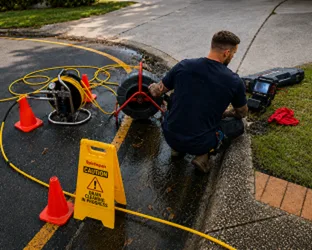
Isolate and contain before anything else, then diagnose properly and put a fixed number in front of you.

Repaired on the spot where possible, tested before we go, and the site left clean rather than mid-job.
Leave your details and an on-call plumber rings back. You will get instructions on what to isolate before anything else.
Cost, response times, and what actually counts as an emergency.
Phone is quickest at night. The form works too and reaches the crew covering Hurstville rather than a national call centre.

Leave your details and our local Hurstville team will call you back fast.